How the Quarterback knows
He reads every deal you have ever won, learns what moved it, and works every open deal against that. Here is how.

The Quarterback is a coworker who sits on top of the CRM you already have. He does not replace Salesforce or HubSpot. He reads everything in them, and he adds the one thing they were never built to show: how a deal moves over time.
The rep owns the customer. The Quarterback runs the pipeline. He works where your team already works. Inside the CRM, in Slack, in the browser, and inside the AI tools they already use, like Codex and Claude.



The Quarterback lives where your team works.
He learns from the whole deal, not a snapshot
Every deal is a path. It opens, it moves through milestones, it speeds up, it stalls, it closes or it dies. That path is the trajectory, and it is the thing no CRM records. Your CRM has every activity and every stage change sitting in a table. It just never connects them, so the motion is never assembled.
The Quarterback assembles it. For every deal you have won, he has the full trajectory: which milestones the winners hit, in what order, and how long each step took. That is what "what wins here" means. Not a methodology. The actual shape of your own won deals.

The Deal's Momentum
He builds the plan with your rep.
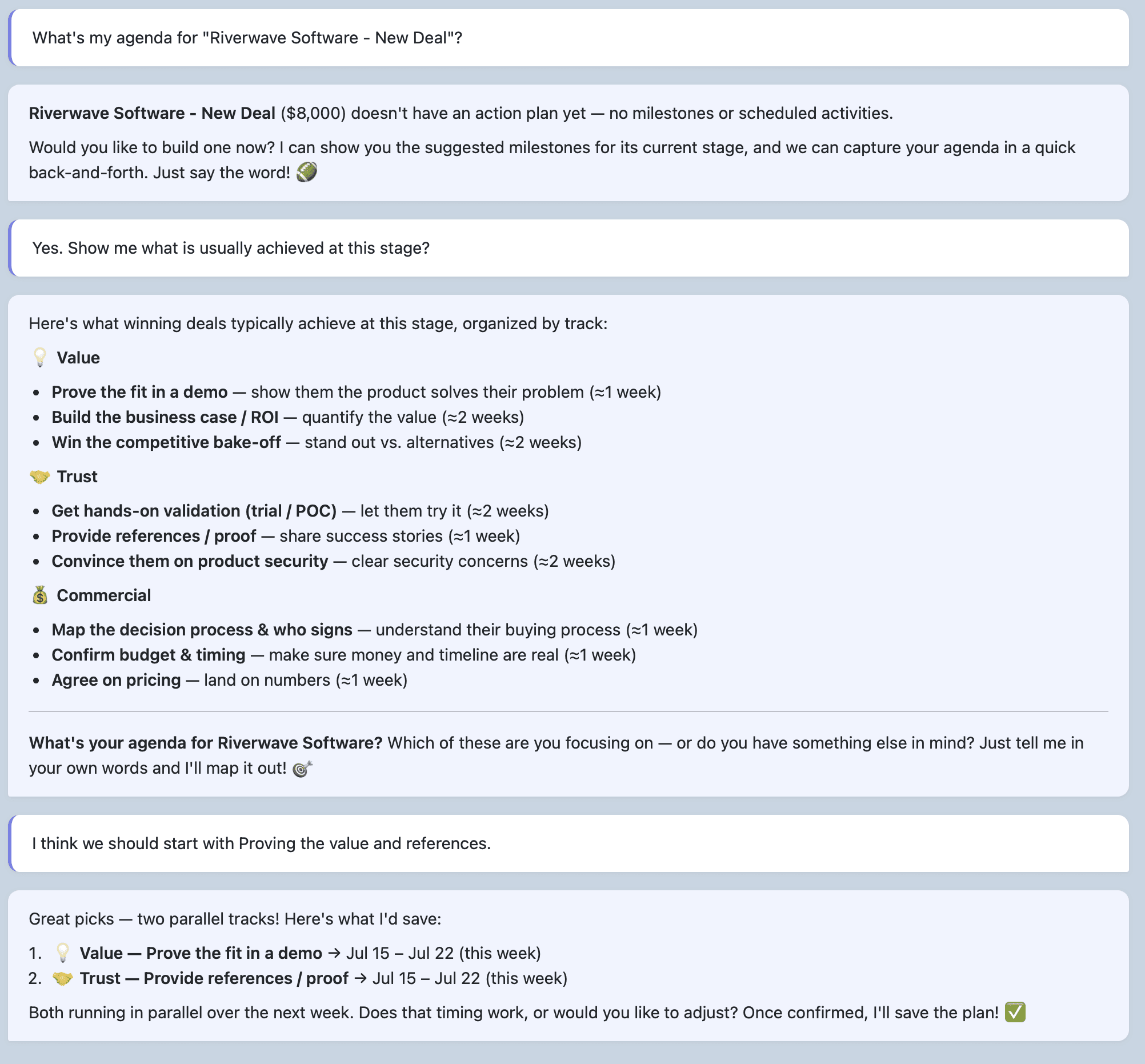
Building a plan with the Quarterback.
The Quarterback does not hand the rep a checklist. He opens a conversation. Based on how your winning deals moved, he proposes the milestones this deal should hit and when. The rep pushes back, adjusts, rejects what does not fit. Only the rep can read the customer in the room. The Quarterback knows every deal that ever closed. The plan is where the two meet, and because the rep authored it, it is his.
The rep commits to milestones, not to activities. How he gets there is his craft. And a plan can always be revised: when a deal changes, the milestone moves, out loud, in the conversation. There are no missed steps, only a plan that stays current.
He keeps the pace
Ask the Quarterback what to work on today, and he reads the whole picture at once. Across every open deal, he sees where Momentum is building and where it is draining, how long since the last activity, what the next milestone is, and whether anything is actually moving the deal toward it.
Then he tells you where to spend the day. Not the deals that are loudest, the deals where you can change the outcome. The ones drifting off the plan you set, the ones where a milestone is overdue, the ones going quiet before anyone noticed.
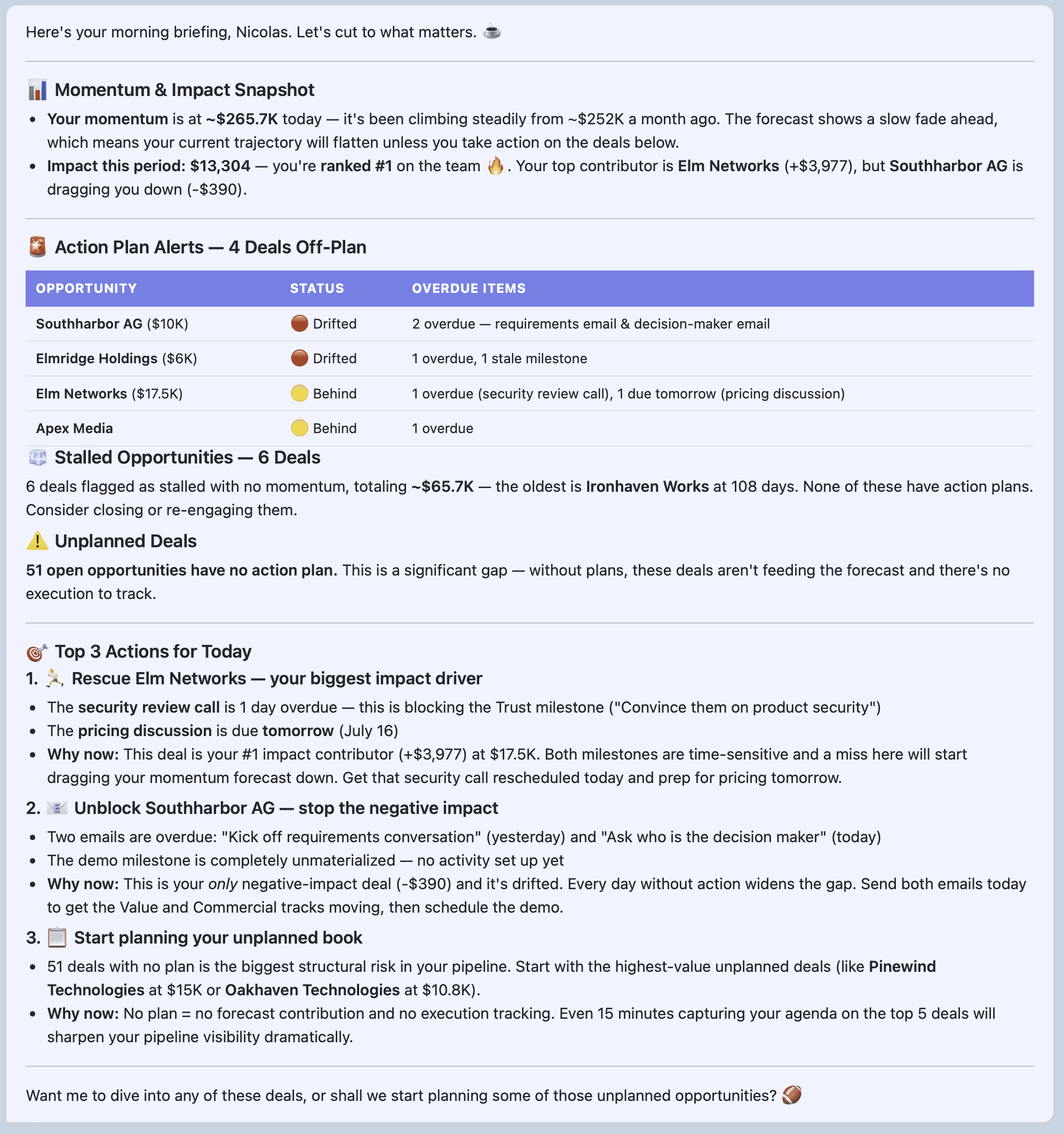
The morning brief.
The live leaderboard
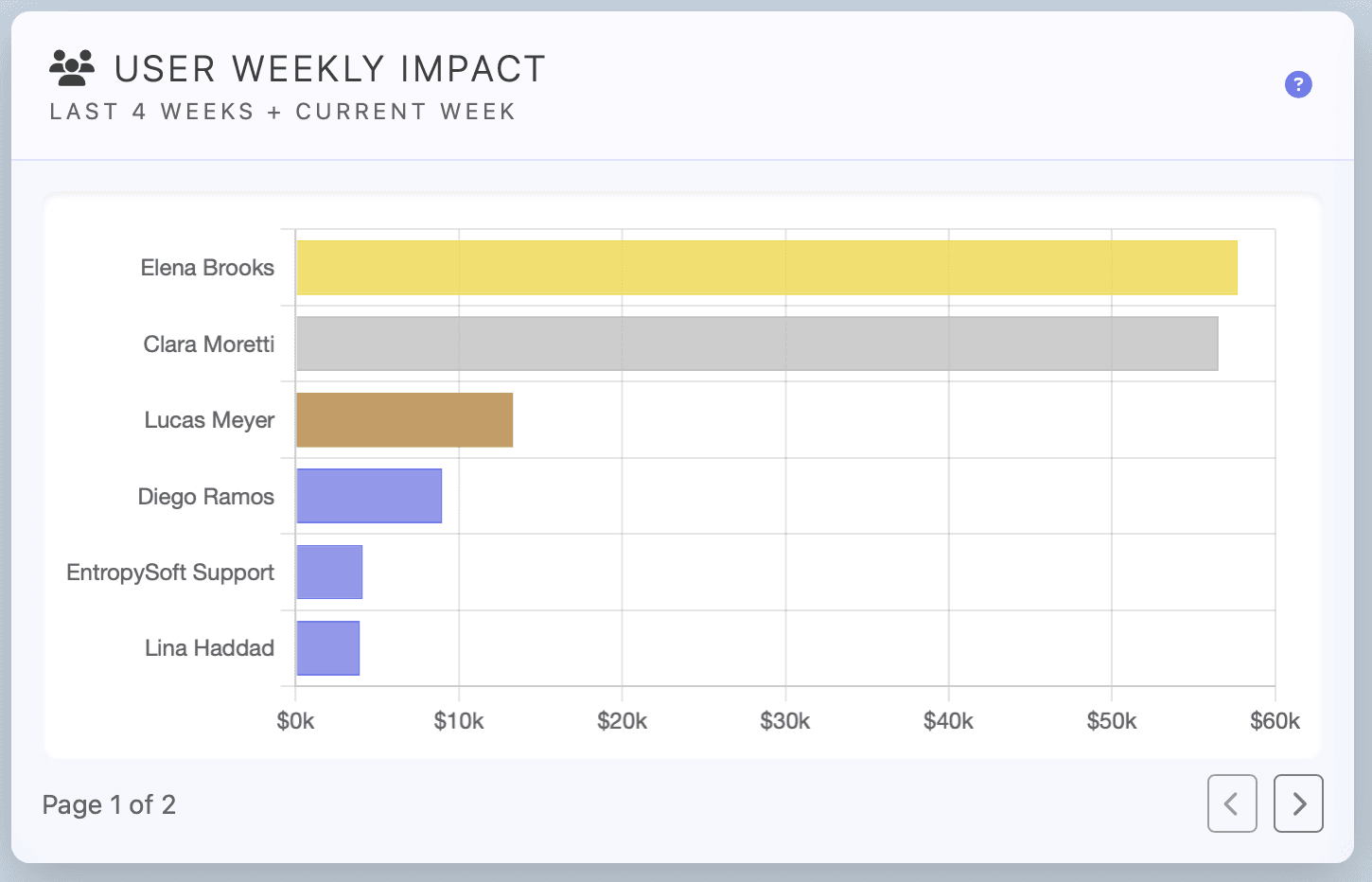
The live leaderboard.
How he knows
Everything the Quarterback needs is already in your CRM. Every activity, every stage change, every timestamp. But each record sits alone. Nothing connects one to the next, so the motion is never built. The data for the film exists. The film is never made.
This is Deep Reinforcement Learning, the same class of technology that drives the car, and it does two things, not one. It reads the trajectory, which is how he sees the motion a snapshot cannot show. And it learns a policy, which is how he acts on it: the moves that carry a deal toward the outcome, learned from every deal you have won. Predictive AI can describe a pipeline. Only a policy can run one. That is the line between an intelligence layer and the Quarterback.
He drives the road. The rep chooses the destination.
Two units no CRM has ever had
From the trajectory he derives two things that exist in no other CRM. Impact and Momentum are proprietary to Dynamiks.
Impact is the dollar value of an action. Not a fixed one. A reply is worth more than a week of silence. A message that books a meeting is worth more than one that gets deferred. He prices each action by what it changed. And inaction is not zero: when nothing moves, the pipeline quietly loses ground.
Momentum is the velocity of a deal. Impact accumulates into Momentum. When you act, it builds. When you wait, it drains.